
Gutter Installation in Shenandoah
A valley-heavy roof does not shed rain evenly. It funnels it, and whatever gutter sits under that funnel either carries the load or spills it onto your slab. We measure where the water actually lands on a Shenandoah house, then form seamless aluminum on the driveway to fit those runs, with downspouts wide enough to keep up.
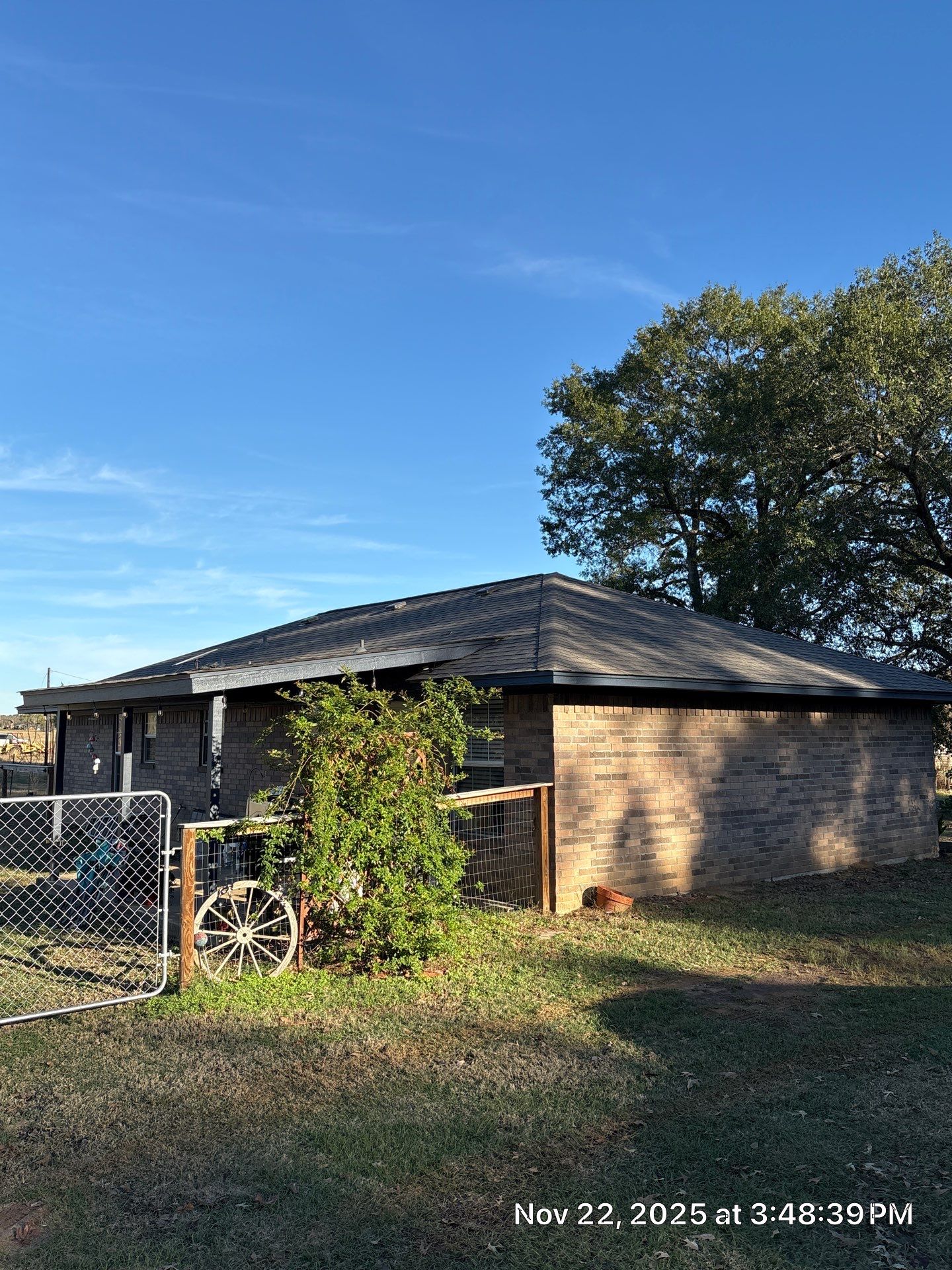

What a Downpour Does to a Valley-Heavy Roof
Shenandoah roof lines collect rain into a few points. Sizing has to follow the water.
Houses around here rarely have one long simple slope. Roof lines in Shenandoah tend to break into several planes, with multiple valleys and hip intersections meeting over the same short stretch of eave. Rain hitting a thousand square feet of that roof does not arrive at the edge in an even sheet. It gathers in the valleys and arrives at two or three spots, all at once, moving fast.
Now add the way Gulf Coast rain shows up. It comes in bursts, sometimes an inch or more in an hour, rather than a soft all-day drizzle. Put those two things together and you get the thing homeowners describe to us on the phone: a sheet of water pouring over the front edge of a gutter that looks perfectly clean, right at the corner where two valleys drop in. The gutter is not clogged. It is simply too small for what that valley hands it.
Faith Roofing Group handles gutter work throughout Shenandoah and the surrounding Woodlands area, on both houses and the mixed commercial properties near the I-45 corridor. We come down from Huntsville with the coil and the forming machine on the truck, so the runs are cut to your rooflines rather than spliced together from stock lengths. If you want to see finished work before we start, the project gallery has photos from around Montgomery County.
Where We Put the Capacity
Two numbers decide whether a system keeps up: the trough size and the downspout opening. Most builders run five inch K-style with two by three inch spouts on everything, which is fine on a simple ranch and undersized the moment valleys start concentrating flow.
- Six inch K-style trough on the runs that catch valley discharge, which carries noticeably more water than the five inch profile and looks nearly identical from the street.
- Three by four inch downspouts at the collection points, because a wide spout drains a full trough instead of backing it up.
- An additional drop point when one long run feeds a single corner. Splitting the load beats forcing all of it through one opening.
- Half round profiles where the architecture calls for it, sized up the same way.
- Hidden hangers set tight, so a trough full of water and wet pine needles has nothing to sag against.
Seamless Aluminum, Formed in Your Driveway
One continuous run per side, with joints only where the roof forces them.
Cut to Your Roofline
Aluminum coil feeds through the forming machine at the curb and comes out at the exact length of the eave it serves. A forty foot side gets a forty foot trough. The only seams on the whole house end up at corners and end caps, which is where sectional gutter systems start leaking first.
Corners Built on the Bench
Complex roof lines mean plenty of inside and outside corners, and each one is a place water changes direction and looks for a way out. We miter and seal those corners before they go up rather than patching them together on the ladder with scrap and a caulk tube.
Color That Disappears
Baked aluminum finishes come in enough shades to match your fascia, trim, or brick, and we bring samples to hold up against the house before anything is ordered. Done right, nobody notices the gutter, which is the point.
Pine Needles, Leaf Load, and the Truth About Guards
What the tree canopy over this part of Montgomery County actually does to a trough.
Needles Never Stop Falling
Pines shed a little all year instead of dropping everything in one fall week. That means a trough under heavy canopy is never empty for long, and needles are small enough to slip through most screens and pack into a mat at the spout opening. Leaves are easier to see and easier to clear.
Valleys Deliver the Debris Too
Whatever lands upslope washes down the valley with the water and stacks at the bottom of it. On a roof with several valleys, debris does not spread out along the eave. It piles at a handful of predictable points, which are the same points already carrying the most water.
When a Guard Earns Its Keep
Under moderate canopy, a fine mesh guard fitted properly turns two cleanings a year into one and keeps the spout openings clear during storm season. On a house where you cannot safely reach the back eave with a ladder, a guard is worth it for that reason alone.
When We Tell You to Skip It
Under dense pine, needles can bridge across a mesh and shed water right over the lip, which turns a maintenance chore into an overflow problem you paid extra for. If that is your situation, we will say so and put the money into sizing and access instead. Honest advice is cheaper than a guard that fights you.
Fascia We Find Once the Old Gutter Comes Off
The board behind the trough is the part nobody sees until installation day.
Every hanger we set drives into fascia, and fascia is the one piece of trim that spends its whole life directly behind a wet gutter. When an old system has been overflowing at a corner for a few seasons, the water has been running down the back of the trough into that board the entire time. From the ground the board still looks painted and fine.
So before any new aluminum goes up, we pull the old runs and walk the eave with a probe. Soft spots, separated laminations, and ends that have gone spongy at a corner get flagged right then, while the eave is open and the fix is straightforward. We show you what we found and what it takes to replace the affected sections. Nobody wants a surprise mid-project, and hanging new gutters on rotten board is a warranty claim waiting to happen.
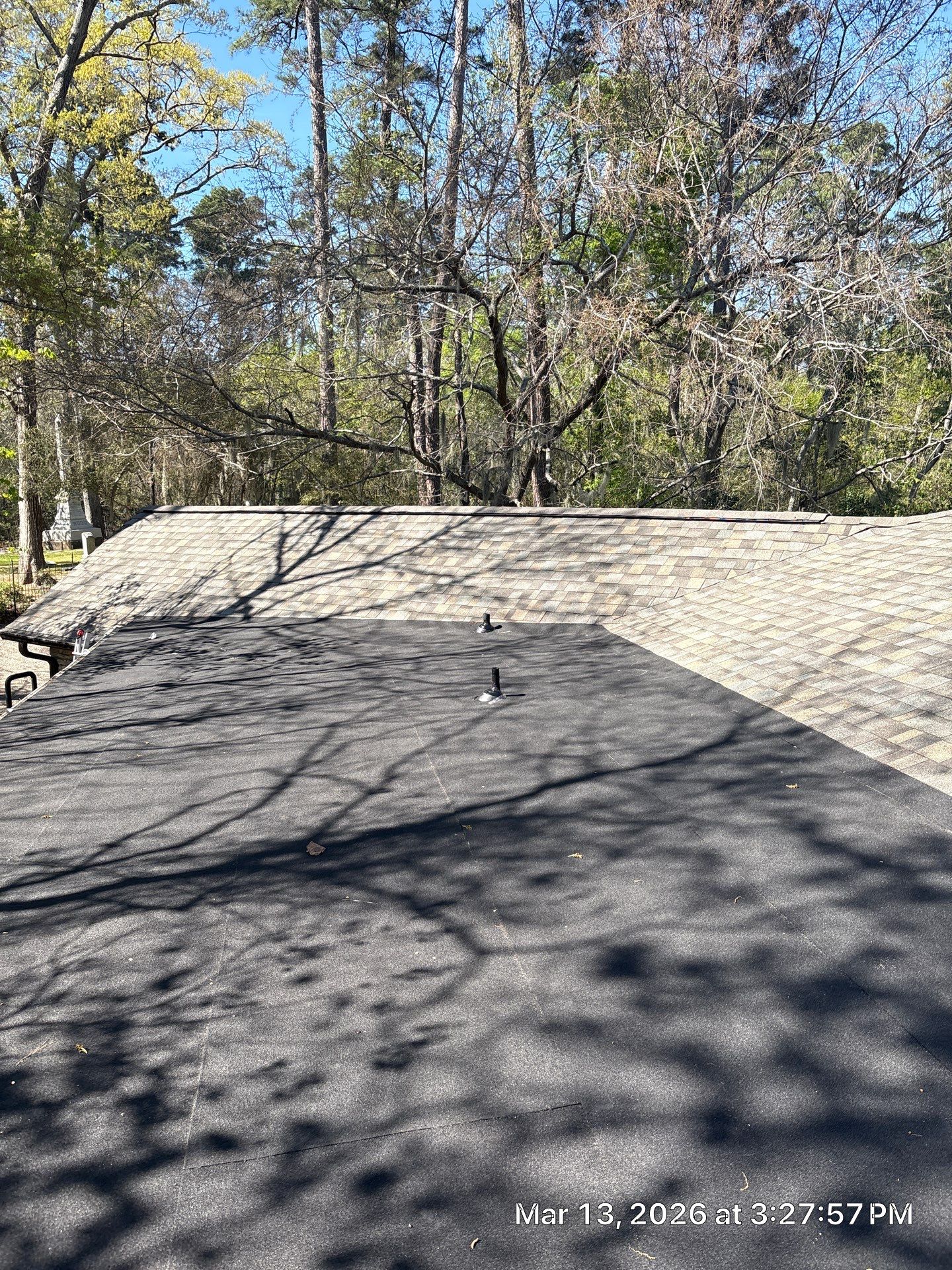
This is also the moment where a gutter job and roof work overlap. Drip edge, the first course of shingles, and the gutter all meet along the same few inches of the eave, so if the roof is due anyway, doing both together saves tearing back into the same detail twice. Our roof installation crews and the gutter crew work off the same measurements, and plenty of local homeowners bundle the two into a single roof installation in Shenandoah project. If you are only chasing a leak for now, roof repair can address the immediate problem and the gutters can follow later.

Getting the Water Away From the Slab
A trough that keeps up and a spout that dumps at the foundation solves nothing.
Where the Downspouts Land
Most homes in this part of South Montgomery County sit on slabs, and a slab does not care for soil that stays soaked on one side and dries out on the other. That is the pattern a short downspout creates: repeated soaking right at the edge, season after season, while the far side of the house dries and shrinks.
So we plan the discharge before we plan anything else. Spouts come down where the grade already falls away, extensions carry the flow past the flower beds, and where the ground runs flat we bury a line out to a pop-up emitter in the yard. We keep the discharge away from walkways, driveways, and any spot where water would sheet back toward the house. On the commercial buildings near David Memorial Drive the same thinking applies with different hardware, since parking areas and entrances cannot take a spout emptying across them.
Faith Roofing Group covers Shenandoah alongside the rest of the Woodlands area, and after a hard storm we handle storm damage repair and metal roofing work on the same trip when it makes sense. Call (936) 354-3232 and we will come look at where your water is going.
Questions We Get in Shenandoah
Straight answers about sizing, guards, fascia, and scheduling.
My gutters are clean and they still overflow. Why?
That is almost always a capacity problem rather than a debris problem, and it is common on roofs with several valleys feeding one short stretch of eave. The trough fills faster than the spout can drain it, so the excess goes over the front lip. Going up a trough size at that run, widening the spout, or adding a second drop usually settles it for good.
Can you match the color to my brick and trim?
Yes. Baked aluminum comes in a wide range of finishes, and we bring physical samples to hold against your fascia and brick in daylight rather than asking you to pick from a screen. Most homeowners land on something that reads as trim, so the gutter blends into the roofline instead of drawing the eye along the eave.
What happens if you find rotten fascia during the install?
We stop and show you. Once the old trough is down, we probe the full eave, mark anything soft or delaminated, and explain what replacing those sections involves before we go further. The board is open and accessible at that moment, so it is the cheapest hour of the whole project to deal with it properly.
Are guards worth it under all these pine trees?
It depends on how dense the canopy is over your particular eaves. Moderate cover, and a fine mesh guard cuts your cleanings down meaningfully. Heavy pine directly overhead, and needles can mat on top of the mesh and send water straight over the edge. We look at your trees first and tell you honestly which of the two you have.
Should I replace gutters while the roof is being done?
If the gutters are already tired, yes. Drip edge, the starter course, and the gutter all share the same few inches of eave, so sequencing them together means that detail gets built once instead of disturbed twice. If your existing runs are recent and draining well, we work around them and leave them alone.
How long does the job take on a typical house here?
Most single story Shenandoah homes are a one day job start to finish: tear off the old runs, check the fascia, form the new aluminum on site, hang it, set the spouts, and clean up. Two story houses and roofs with a lot of separate planes and corners can run into a second day. We give you the schedule in writing up front.